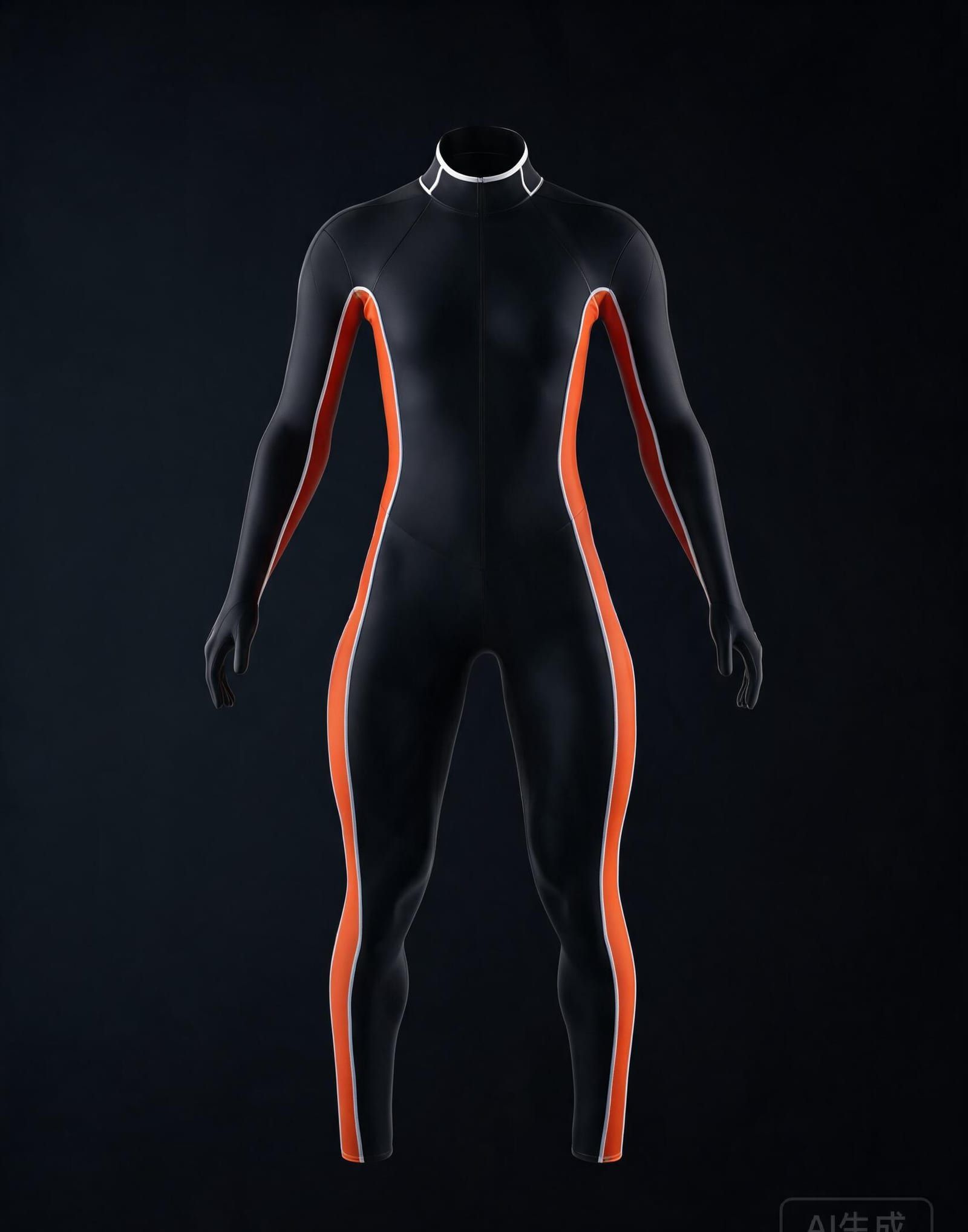
Short track suits look simple: a tight one-piece with a flag and a number. Underneath, the pattern and the panel layout do a lot of work.
Asymmetric pattern
Short track is skated almost entirely in one direction, with the left hand often on the ice. The pattern accommodates a deeper fold on one side and a shoulder that has to reach forward through the corner. This is why a suit adapted from an inline block rarely feels right on the ice.
Protective panel layout
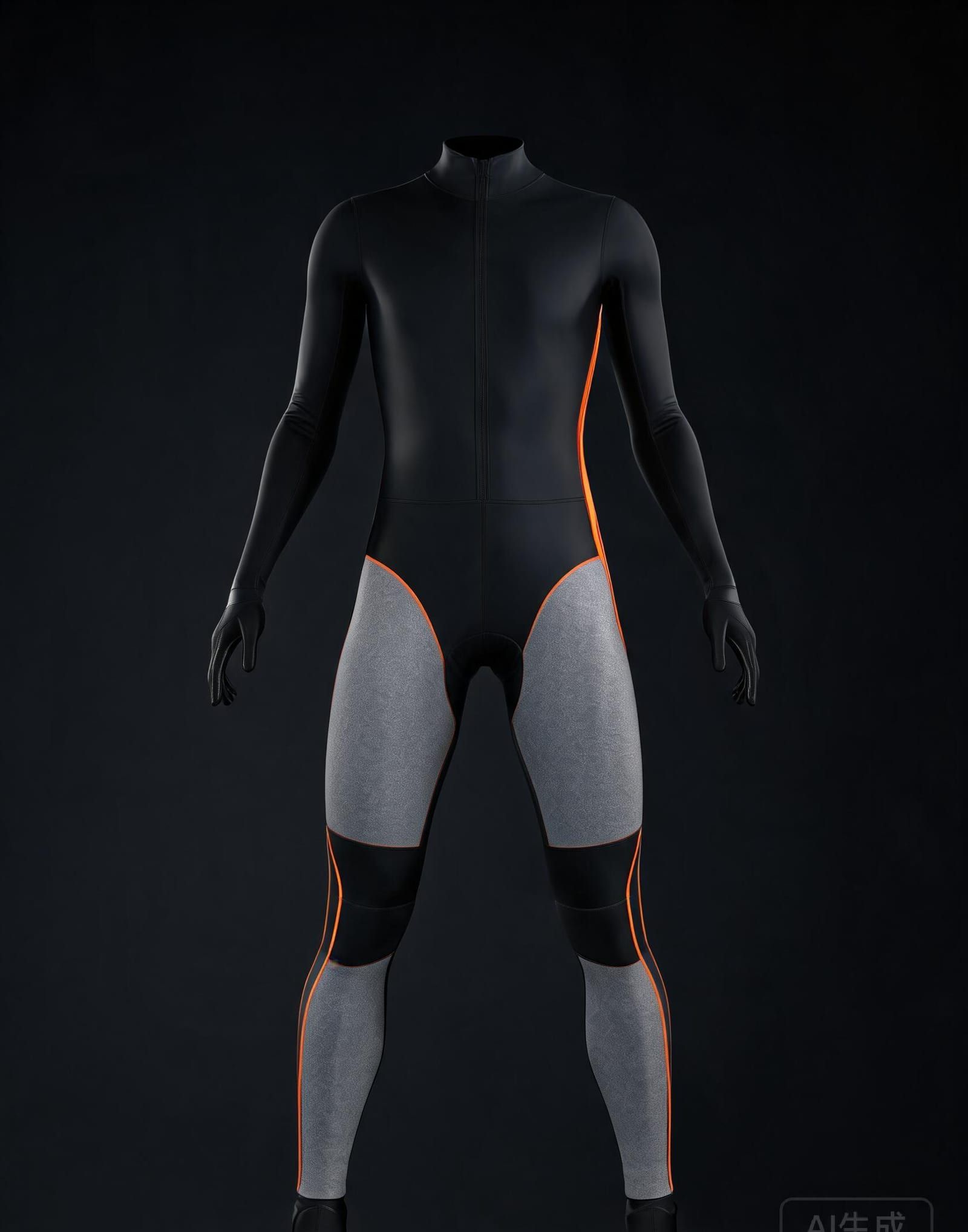
Panels are placed where a blade can reach in a fall: the calf and shin, the outer thigh and the hip. Coverage is shaped rather than wrapped, so that the panel sits outside the primary stretch lines and the leg can still extend.
Seam placement
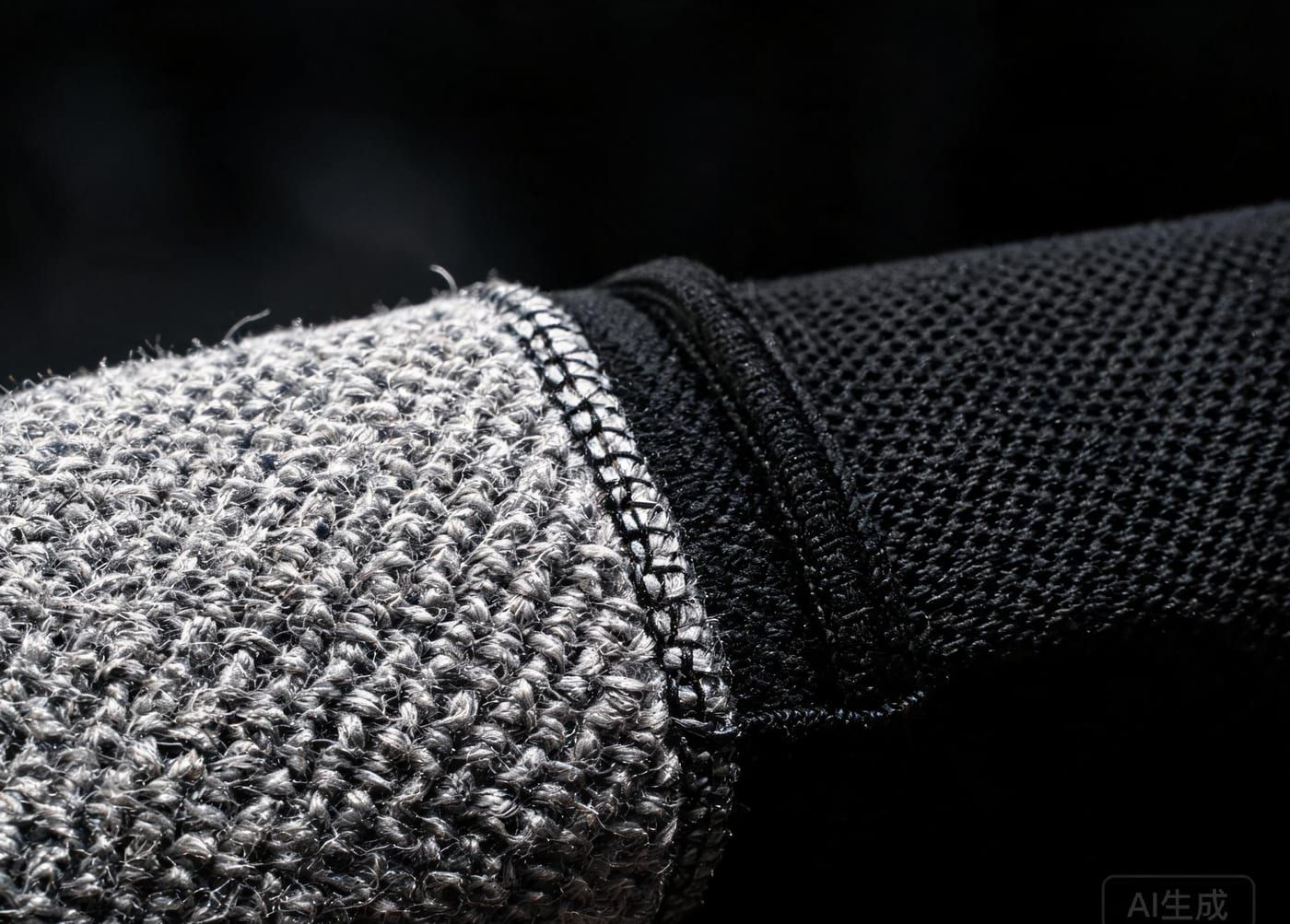
Flatlock seams reduce bulk, and their position matters as much as their type. A seam running under the knee or across the hip crease will chafe through a race distance. Good patterns route seams away from those flex points.
Graphics for pack racing
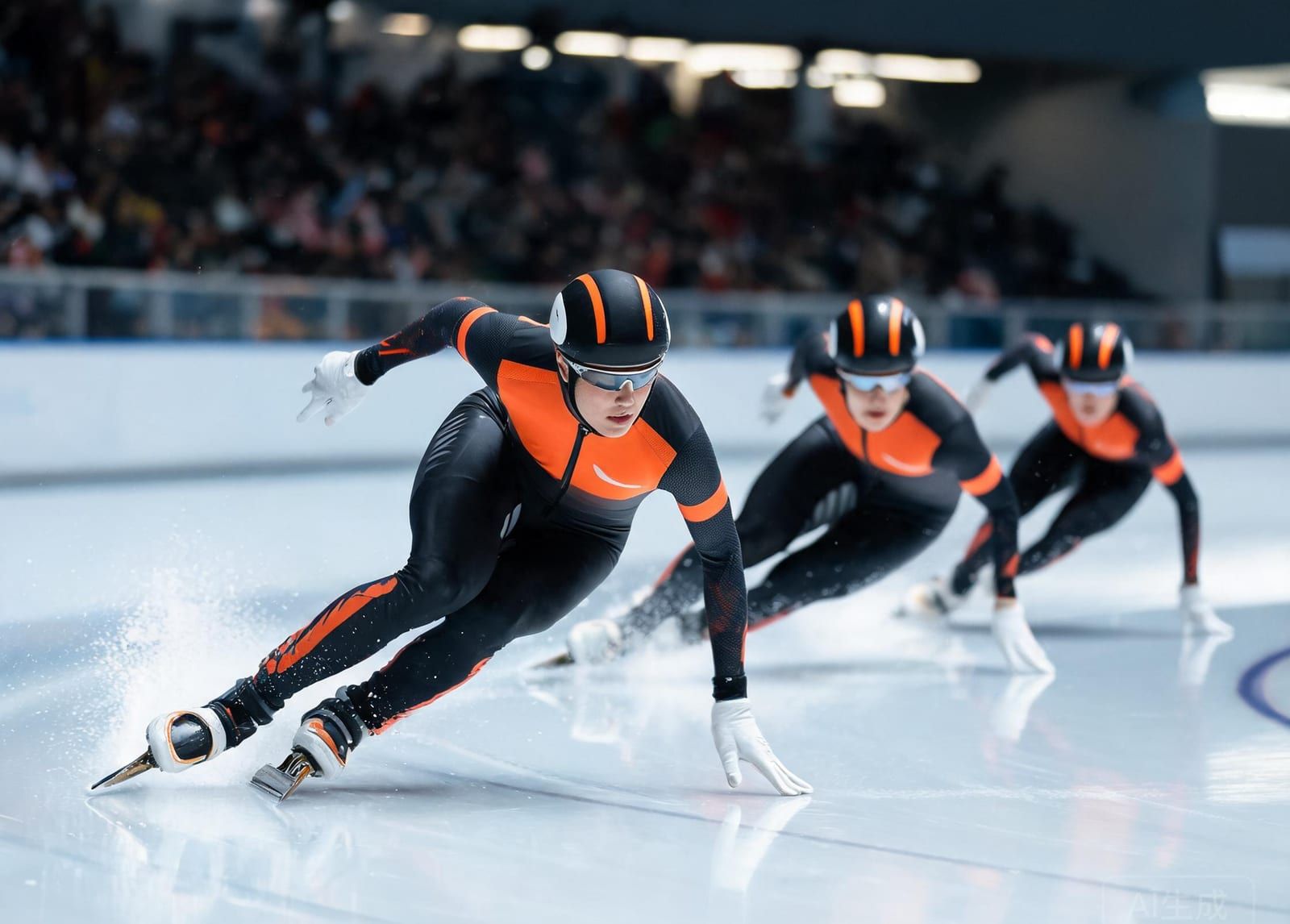
In a pack, the suit is seen from a distance and at an angle. Large colour blocks, a clear number position and a legible flag or crest work better than fine patterns. Sponsor logos should be sized to read from the boards, not from a photograph.
Number and name printing
Printed numbers and names are part of the sublimation run, so they do not peel and do not add weight. Check that the number position meets your competition regulations before approval.
Collar and neckline
Most short track suits use a relatively high neckline, partly for warmth and partly to keep the suit in place in a deep tuck. A zip is optional; many competition suits use a short zip or none.
Durability
Short track suits take contact with the ice, the boards and other skaters. Reinforcement at the knee and seat, and careful seam construction, extend the life of the garment more than a heavier main fabric does.
Products mentioned in this guide
- Short Track Racing SuitShort Track Speed Skating
- Short Track Team UniformsShort Track Speed Skating
- Cut-Resistant Short Track SuitShort Track Speed Skating