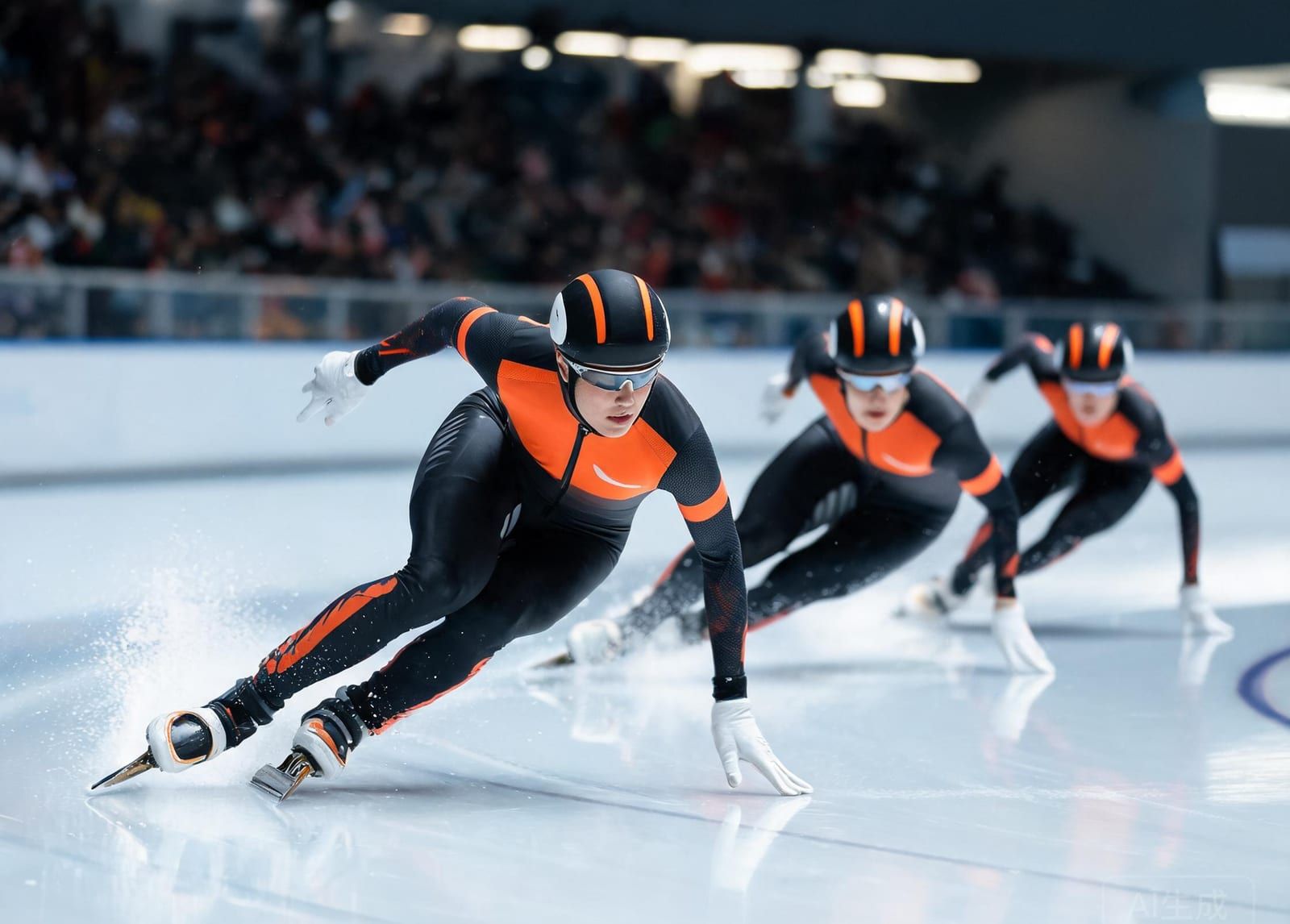
Short track is a contact sport. The suit has to fit through a deep, asymmetric crossover position, protect the zones a blade can reach, and stay intact when a skater goes down at speed. That makes it a different garment from an inline suit.
Fit for the short track position
Short track skaters spend most of a race in a low position with crossed legs, one hip lower than the other and the torso folded forward. A pattern cut for a standing body will pull at the hip and the shoulder in exactly the position that matters.
When you try a suit, get into the corner position: cross one leg behind the other, drop the hip and put your hand down. Check whether the hip allows the crossover and whether the shoulder allows the arm to reach forward without the suit pulling across the back.
Protection options
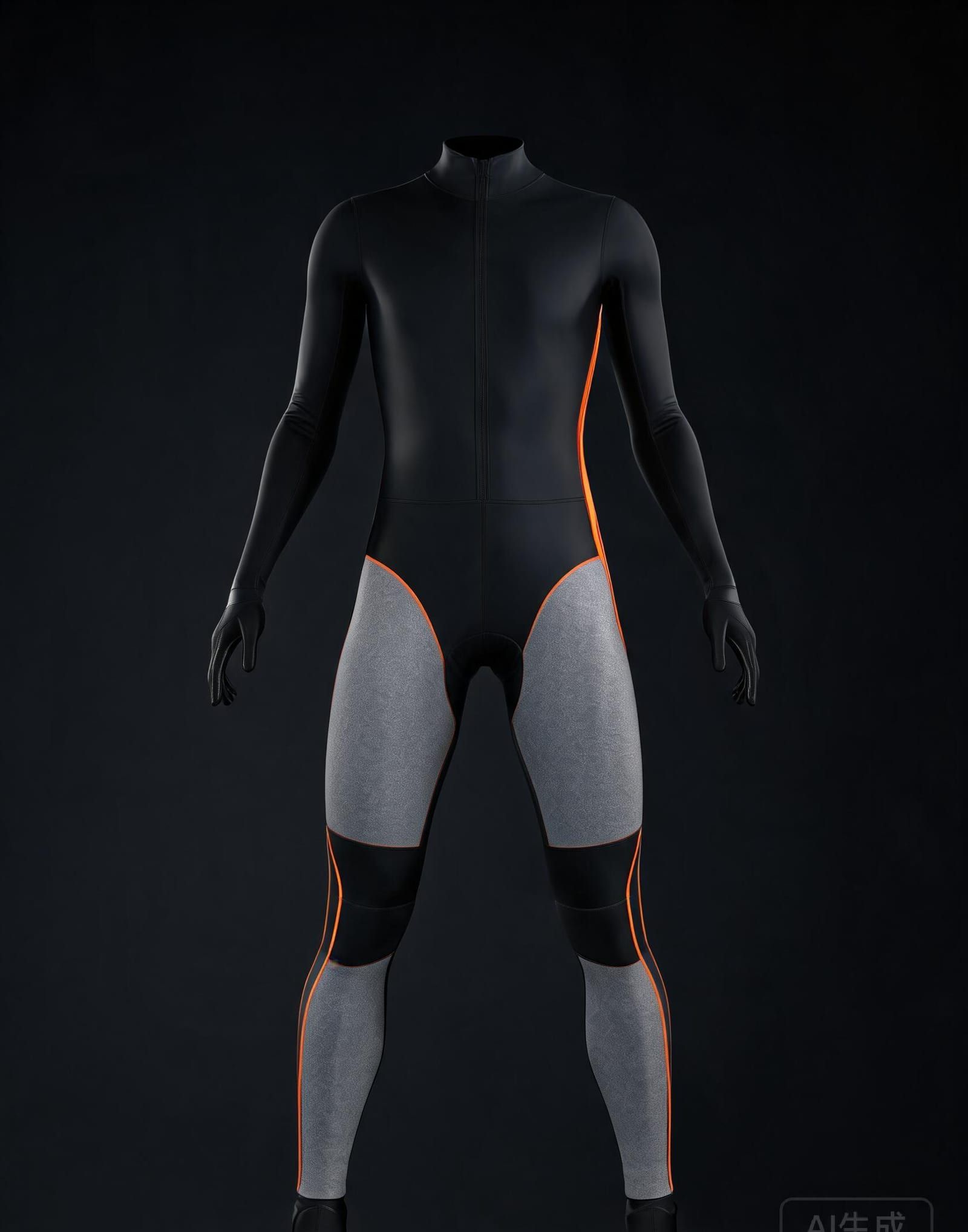
Cut-resistant panels are usually placed at the lower leg, the thigh and the hip. Coverage ranges from minimal to extended, and the right level depends on the club, the federation and the age group.
Two things matter here. First, protective material reduces stretch, so the fit has to be more accurate than on a standard suit. Second, ask for documentation. A protection claim without a test report for the material used is not a specification, it is marketing.
Fabric and construction
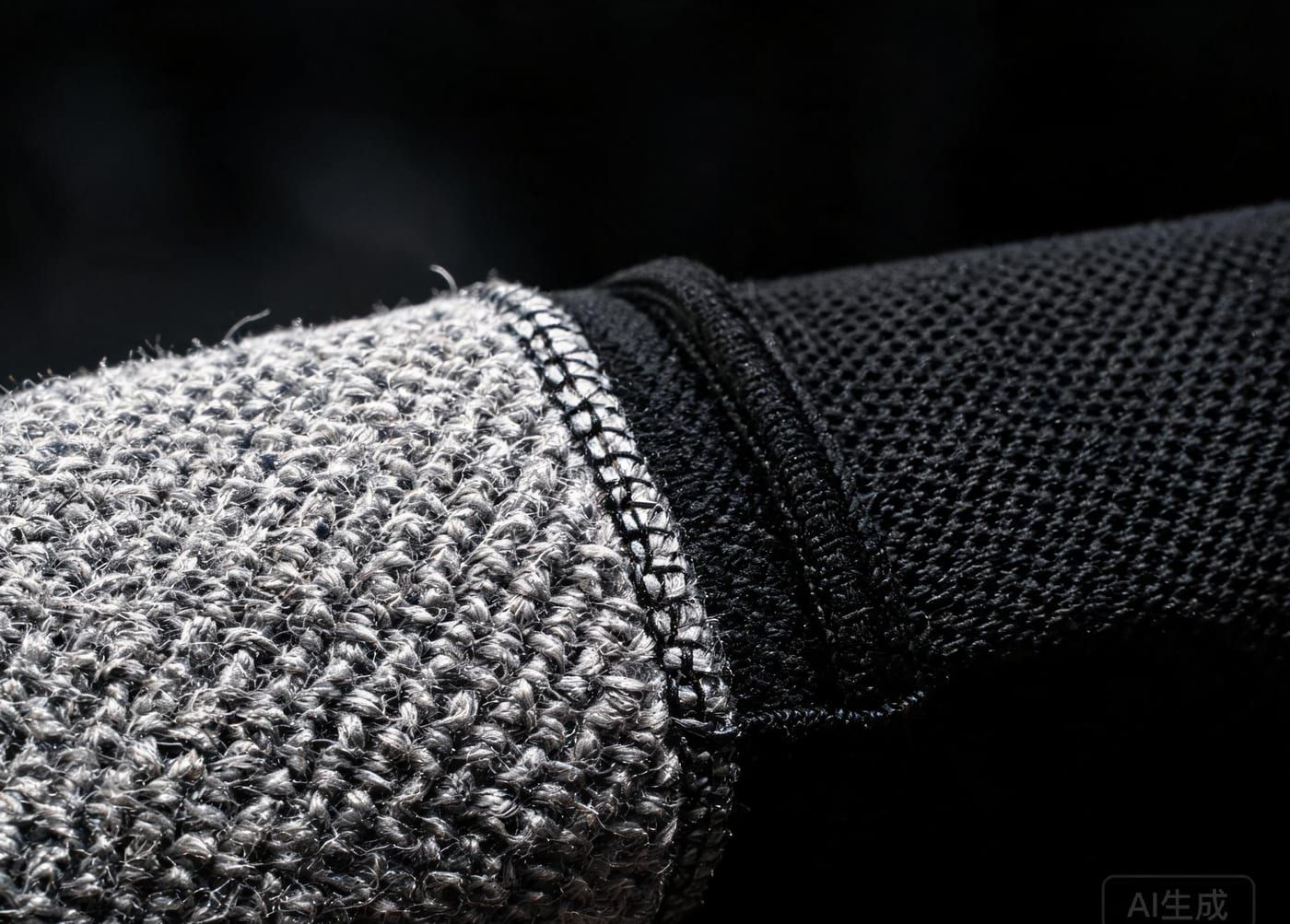
The main knit should be a compression-oriented four-way stretch with good recovery. Seams should be flatlock on the body panels, and the leg gripper should hold without digging in. For short track, seams that sit under the knee or at the hip crease need particular attention because that is where the suit flexes most.
One-piece or two-piece
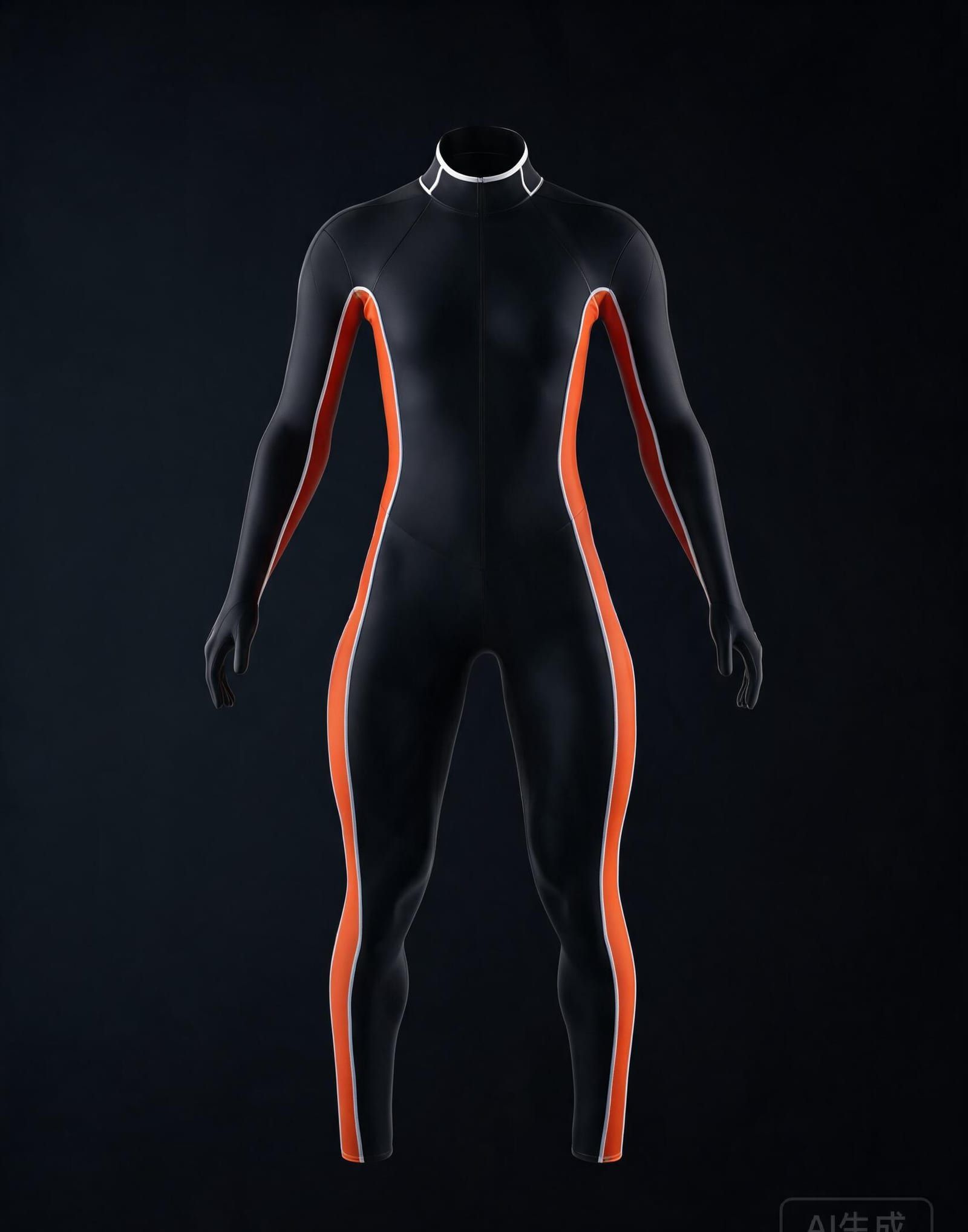
Some federations and competitions require a one-piece suit. For training, a two-piece set is easier to manage. Confirm the competition rule before ordering, because converting a design from two-piece to one-piece changes the pattern.
Race suits versus training suits
Race suits are cut tight and prioritise a smooth, uninterrupted surface. Training suits use a less compressed knit, reinforced knees and seat, and are cut to allow a base layer in a cold rink. Most clubs order both from the same design file.
Ordering for a club
Collect individual measurements, especially for junior skaters. Ask for a sample in one size if the club has not ordered this pattern before. Confirm the delivery date against your competition calendar.
Questions to ask a supplier
- What protective material is available, and what documentation comes with it?
- Is the pattern drafted for short track, or adapted from an inline block?
- Can you supply a sample before bulk production?
- Do you store design and size records for repeat orders?
- What is the actual production schedule, in writing?
Products mentioned in this guide
- Short Track Racing SuitShort Track Speed Skating
- Cut-Resistant Short Track SuitShort Track Speed Skating
- Short Track Training SuitShort Track Speed Skating