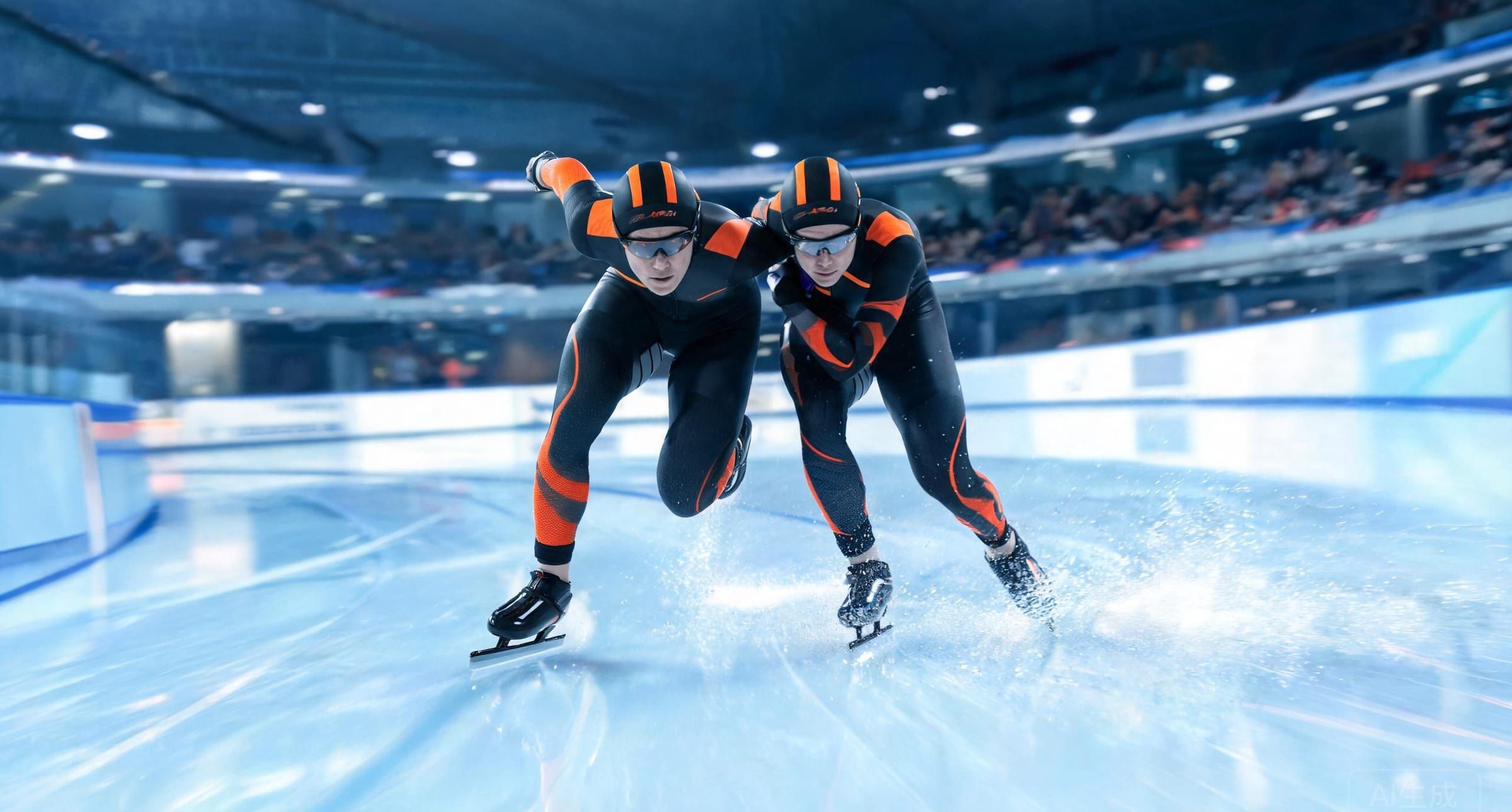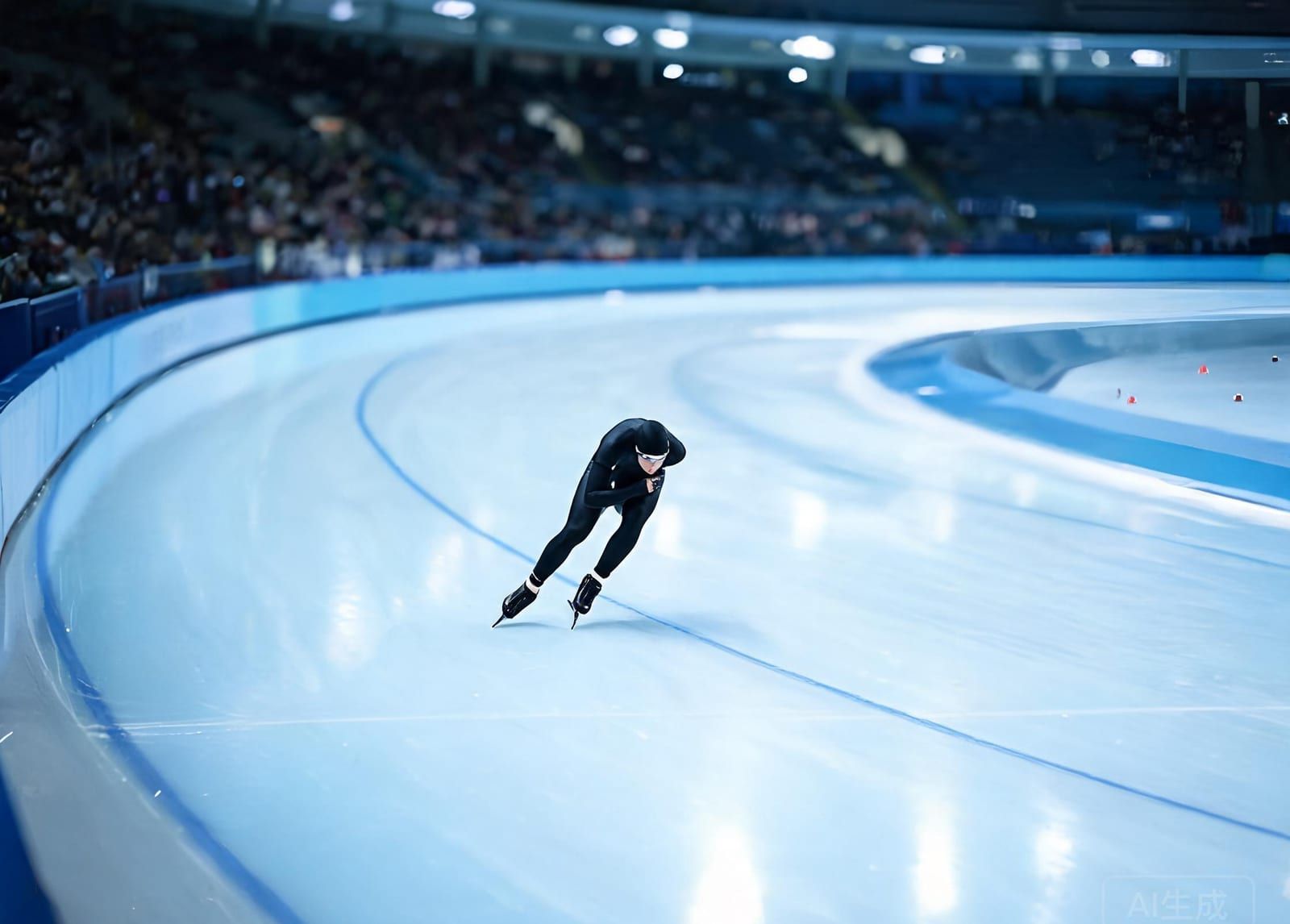
Long track is a time trial on a 400 m oval. The skater holds a deep tuck for most of the race, and the suit exists to support that posture and keep the surface as smooth as possible.
The posture drives the pattern
In a long track tuck the back is flat, the hips are low and the arms are tucked in. A suit cut for a standing body will pull down the back and lift at the shoulder in that position. The long track pattern lengthens the torso, shapes the back panel to stay flat, and cuts the sleeve for a tucked arm.
Collar and neckline
The rear collar sits higher to close the gap between the suit and the helmet. This is one of the clearest visual differences between a long track suit and a short track suit, and it has a practical purpose: less exposed skin and a smoother transition at the neck.
Surface finish
Long track suits use sublimation printing so graphics are part of the fabric, not a film on top. Seams are routed away from the primary airflow over the back and upper arms. These are construction choices, and we describe them as such rather than quoting drag numbers, because measured results depend on the skater, the position and the test method.
Race suits versus training suits
Race suits are cut tighter and use a smooth, high-recovery knit. Training suits use a more forgiving knit, reinforced knees and a slightly less compressed torso. Long track training means high lap volume, so durability matters.
Fit priorities
- Shoulder: must allow the arms to tuck without pulling the back flat panel.
- Torso length: a suit that is too short will ride up in the tuck.
- Knee: must allow the deep bend used in the straight and the corner.
- Neck: collar height should match the helmet without pressing on the throat.
Design for time trials
Long track graphics are seen mostly from the side and from behind. Colour blocks that follow the body line read better than horizontal bands, and flags, numbers and sponsor logos should be sized for television and spectator distance.
Ordering
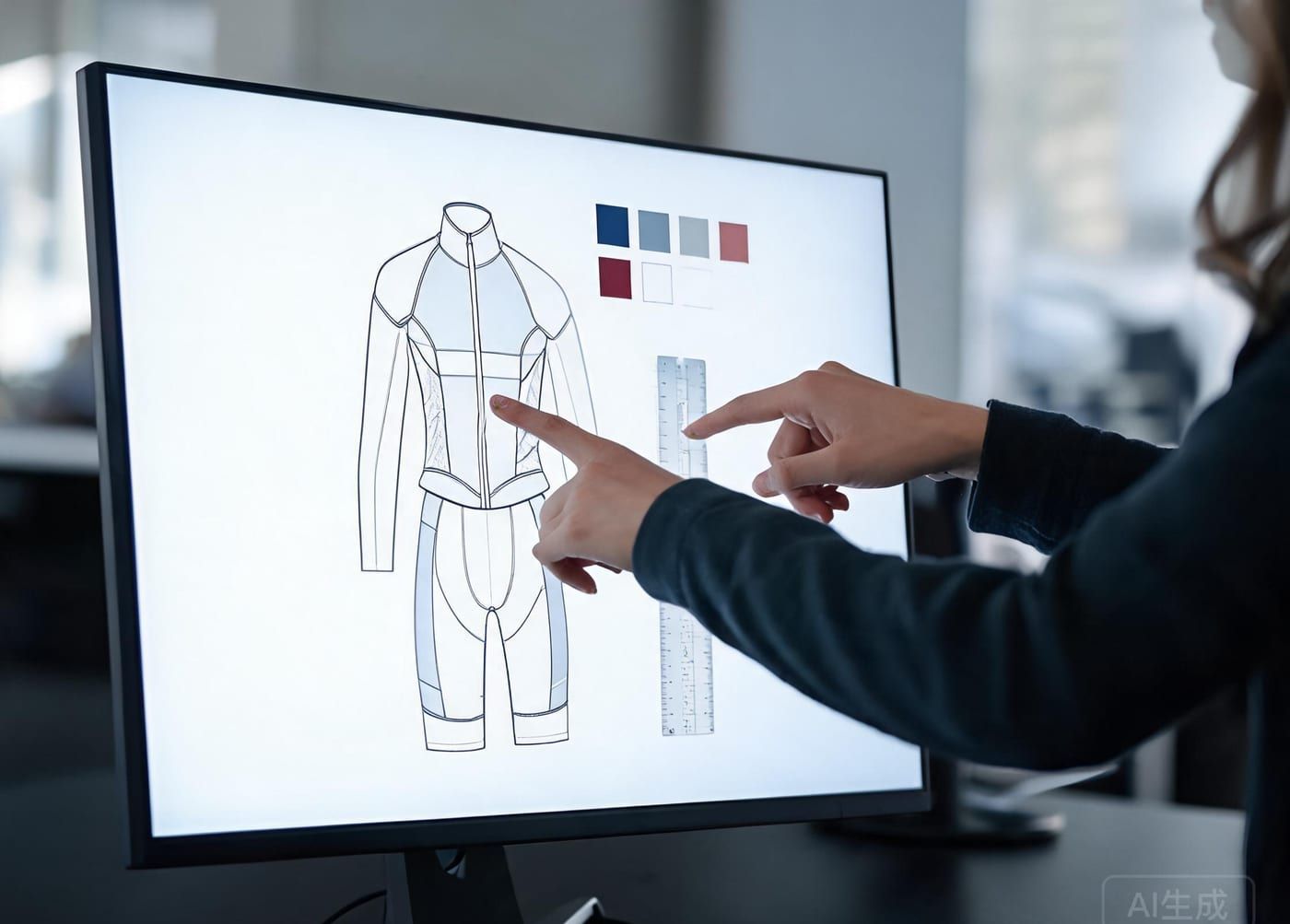
Squads usually order race suits and training suits together from one design file, which keeps colours and logo positions identical. Individual measurements are recommended for the race suit; training suits can use stock sizes for some athletes.
Care
Wash cold, inside out, no softener, air dry. Inspect the zip, the collar and the knee panels regularly, since those are the areas that take the most stress.
Products mentioned in this guide
- Long Track Racing SuitLong Track Speed Skating
- Long Track Competition SuitLong Track Speed Skating
- Long Track Training SuitLong Track Speed Skating