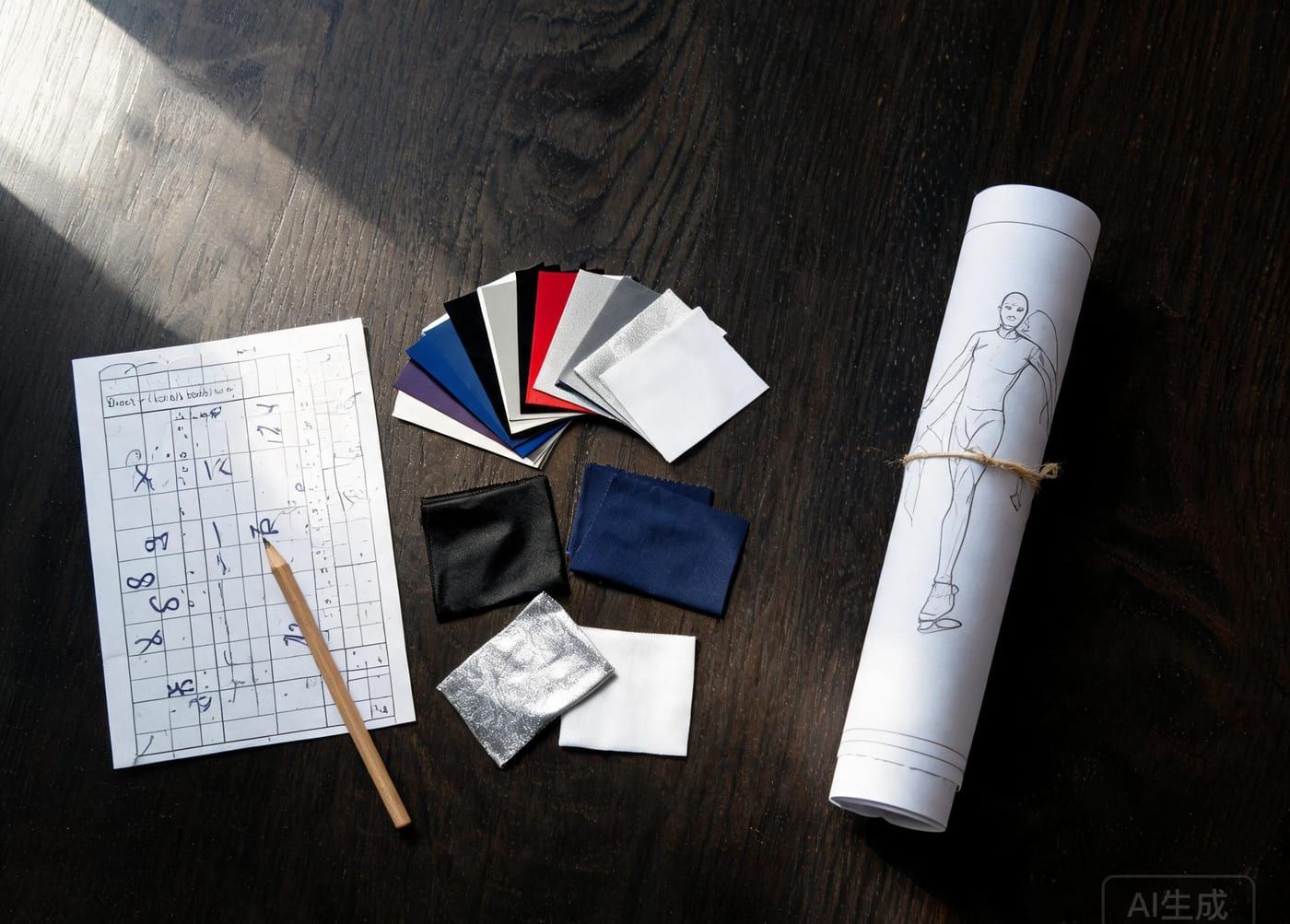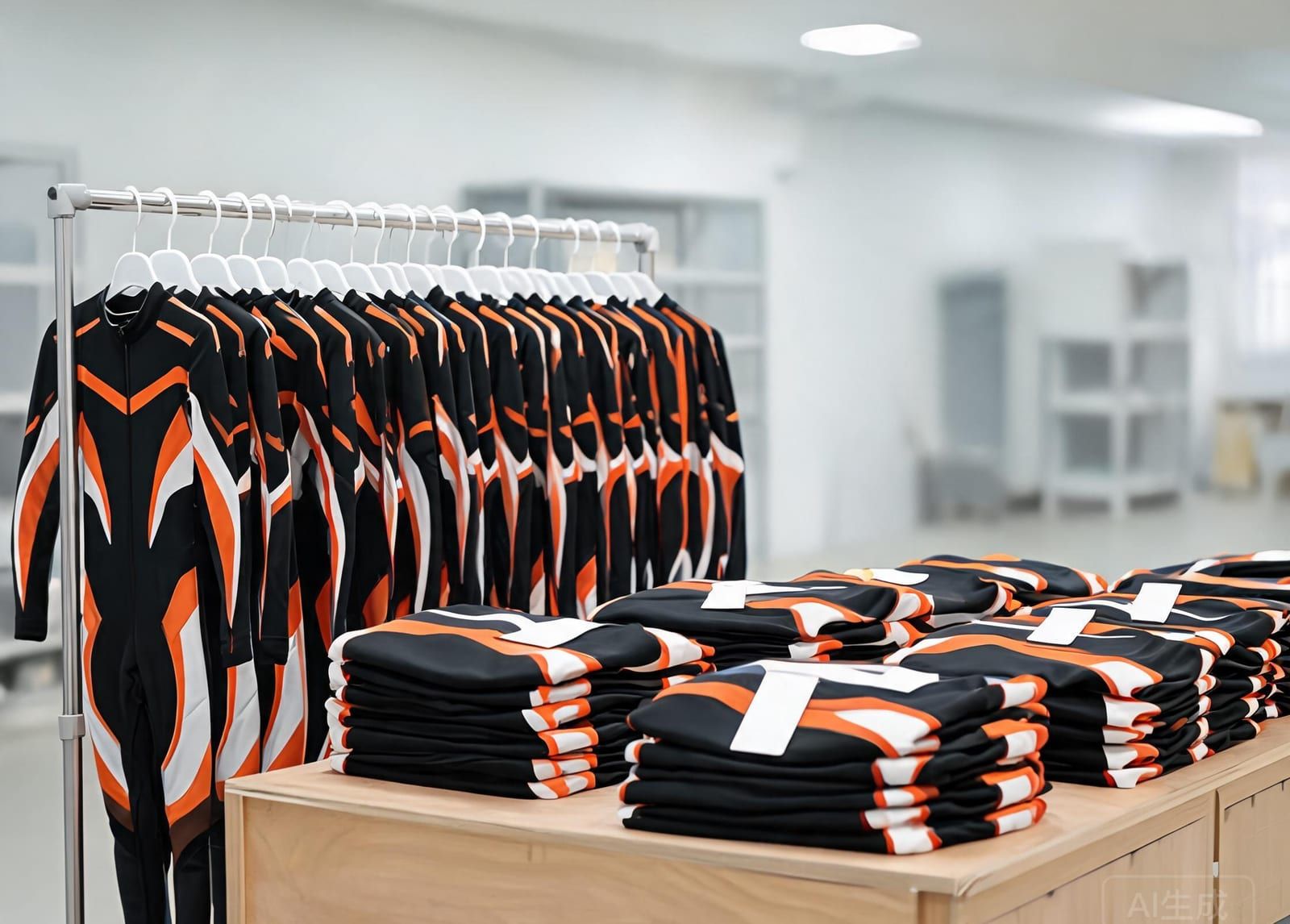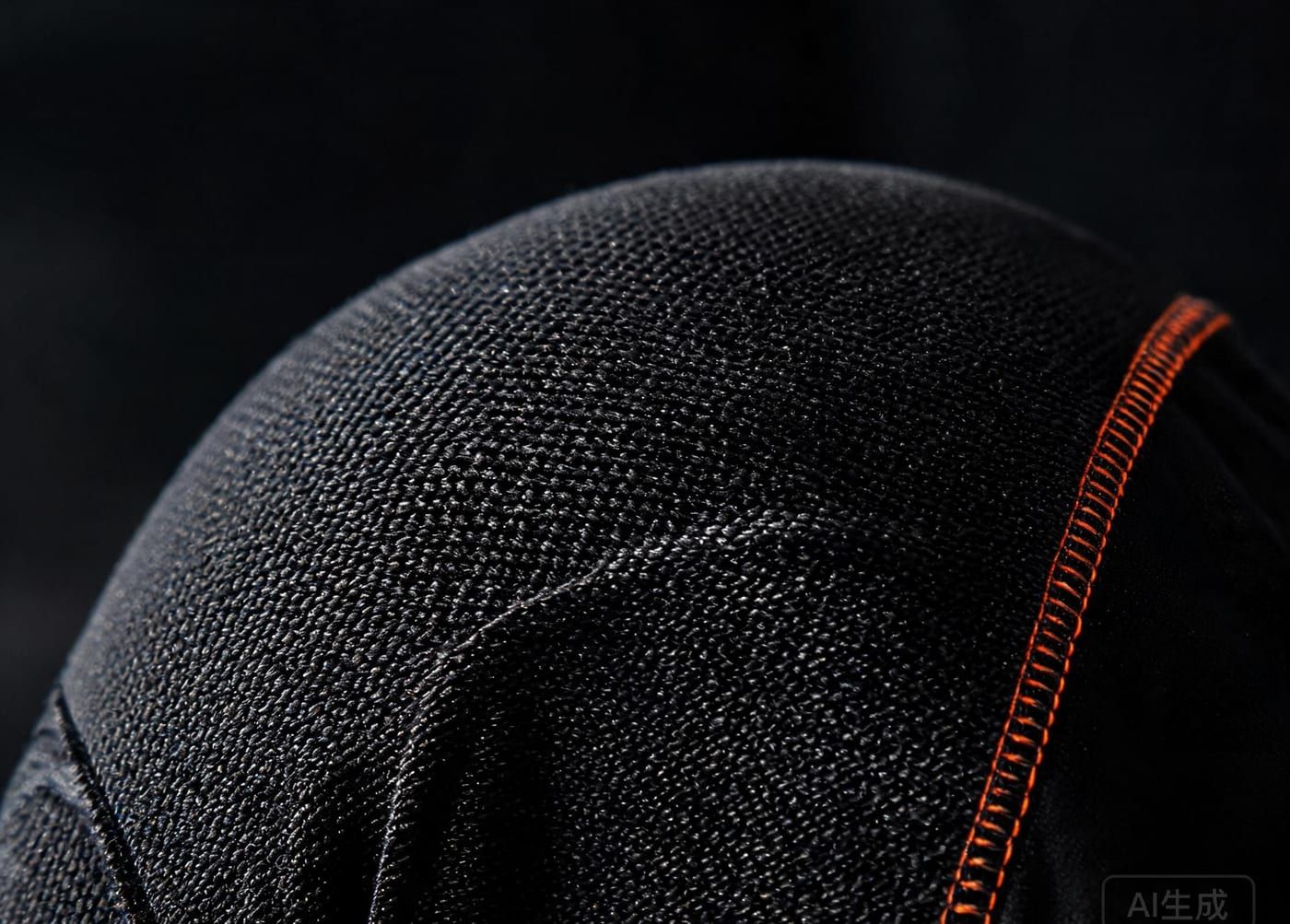
Fabric selection is where a good design either works or fails. The right knit depends on the discipline, the posture, the print and how often the garment will be worn.
Start with the discipline
- Inline: light four-way stretch, high recovery, strong print acceptance, free knee.
- Short track: compression knit plus protective panel options, shaped placement.
- Long track: smooth surface, high recovery, seams routed away from airflow.
Check stretch in both directions
Four-way stretch is the baseline for a race suit. Test it the way it will be used: pull the fabric along the leg direction, not only across the body. A knit that stretches only across the width will feel tight in the thigh and loose at the knee.
Check opacity under load
Stretch the fabric over your hand and look at it against a light. Pale colours and thin knits can become transparent over the thigh or shoulder. If the design uses white on the leg, this test is essential.
Check recovery
Stretch a swatch, hold it for thirty seconds, release it and check whether it returns to shape. Low recovery shows up later as bagging at the knee and seat, and it is the main reason a suit looks worn out after one season.
Check printability
Ask for a printed sample, not a raw swatch. Large colour blocks reveal banding, and fine lines reveal registration problems. The printed sample is the only reliable evidence.
Check hand feel against the season
A very light knit is pleasant in a warm indoor track and cold in an outdoor one. For cold conditions, a slightly heavier knit plus a base layer usually works better than a much heavier suit.
Durability testing
For club kit, ask how the fabric performs in repeated washing and how the seams are constructed. A swatch cannot tell you everything, but a sample suit worn for a few sessions will.
Comparison checklist
- Composition and stretch direction confirmed in writing.
- Opacity checked in the colours you will use.
- Recovery checked on a stretched swatch.
- Printed sample reviewed.
- Seam type and thread specified.
- Care instructions supplied.
If a supplier cannot answer these questions for the material they are offering, choose another supplier.
Products mentioned in this guide
- Inline Racing SuitInline Speed Skating